
People & Leadership
A stay interview starts before a resignation arrives
Plan a stay interview that gives employees room to explain what keeps them at work, what frustrates them and which changes a manager can realistically make.

Better decisions. More thoughtful work.
Plan a stay interview that gives employees room to explain what keeps them at work, what frustrates them and which changes a manager can realistically make.

Use the ladder of inference to separate an observation from the conclusion you draw about a colleague, then ask a question that can change the picture.

An obeya brings project goals, progress and problems into one shared view. Design the room around decisions rather than a wall full of status charts.

Catchball turns a strategic target into a discussion about feasibility, resources and ownership. Learn how to run a useful exchange without endless consensus.

Leader standard work gives managers a repeatable routine for supporting improvement. Make each check lead to observation, coaching or follow-through.
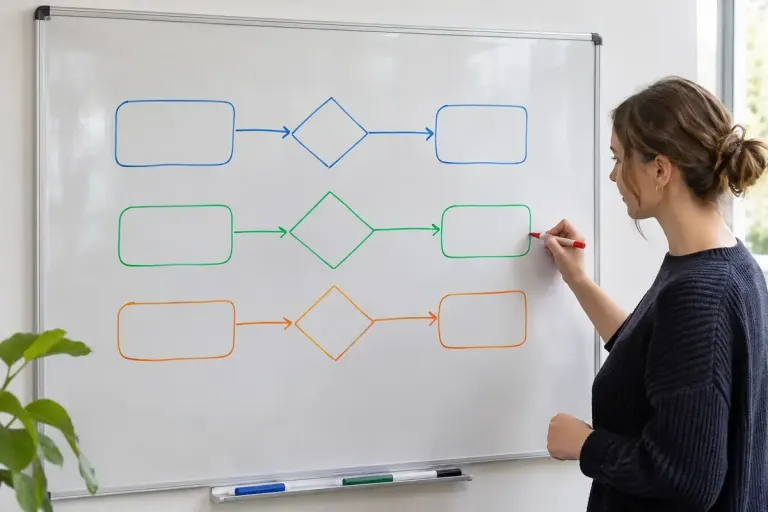
Map a real piece of work across teams with swimlanes. Use the diagram to locate unclear handoffs rather than simply drawing a tidier version of the org chart.

Consent-based team decisions look for reasoned objections within a defined scope. Explore a practical example with safeguards, explicit responses and a review date.
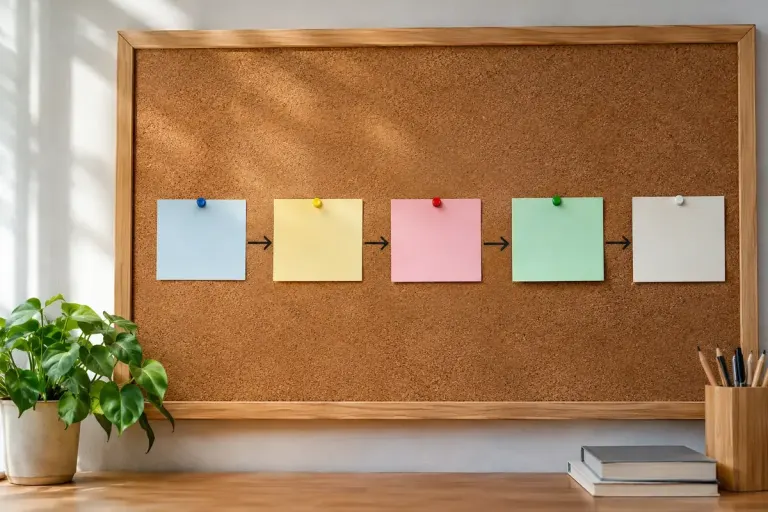
Critical-chain scheduling places buffers around chains of work. Learn what project and feeding buffers protect and how to discuss their use without hiding delays.
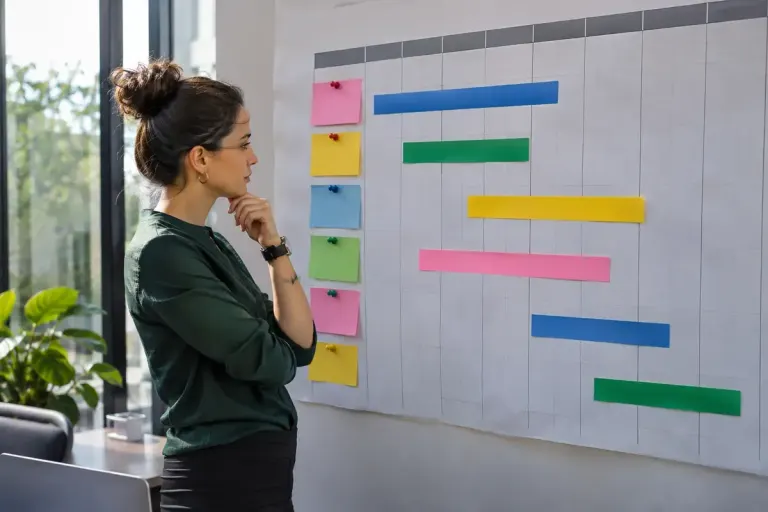
A schedule simulation explores uncertainty in durations and dependencies. Read its assumptions and confidence levels before treating one date as a commitment.